While Wernher von Braun was toiling away at Peenemunde developing V-2 rockets for the Nazis during WWII, it seemed he was the only one on the planet also dreaming about space travel. Sure, lots of people were working on rocket technology, but only in the framework of how far they could throw bombs. Even before the V-2 was functional, Wernher was already imagining men travelling to Mars, planning the venture and determining what that endeavor would take. When the allied forces finally defeated the Germans and ended the war, the battle for the future of space began.
The Russians and the Americans split up the smart guys, with the U.S. getting the better deal by secreting Wernher and fifty of his closest buds out of Germany and eventually getting them back to work on an army base in Texas. Wernher was not just a masterful engineer, he also understood the value of public opinion. He took time out of his busy schedule to work on a couple of films with Disney (Walt himself, not the studio or theme park).
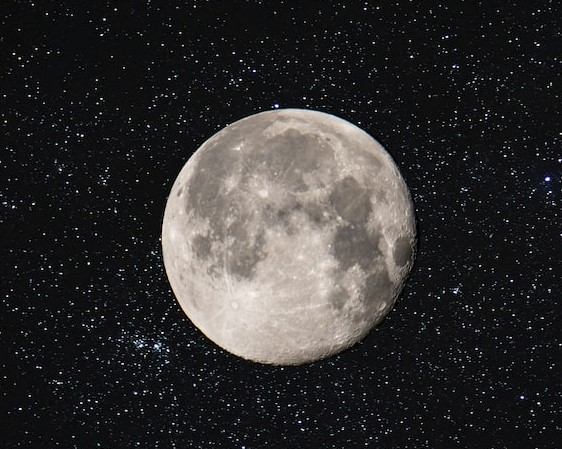
Today, NASA is on the verge of returning to space. Monday’s scheduled launch of the Artemis I is NASA’s first manned (for mannequins) mission since the final space shuttle in July of 2011. They are ready to send a few dummies to circle the moon for a bit more than a month and return them safely to Earth. Their new Orion spacecraft sits atop the largest rocket NASA has ever built, packed with nearly a million gallons of rocket fuel, burning a swimming pools’ worth of the liquid hydrogen and liquid oxygen every dozen or so seconds. This launch has been years in the making and billions over budget. Did I mention this is a government program? But I’m not complaining. Dollar for dollar, NASA is still one of the best programs we have. Nothing strikes the imagination more deeply than seeing the Star Trek fantasy realized. I was just a kid when Neal Armstrong walked on the moon with Buzz Aldrin, and that electric moment has never left me. I still see their grainy television image when I look up at the moon.
Now, many light years later, we are about to boldly go again- this time to Mars, using the moon as a secondary launching/resupply point. Who would have thought it possible, even imaginable?
The privatization of space thus far has done a great deal for space exploration. We’ve seen Captain Kirk himself go into space (kind of) along with a host of wealthy spacenuts. And some quality astronauts as well, like Stevens College graduate Wally Funk. On balance, it’s been a positive. Something greater than even that is happening. The cost, though still incredible, is rapidly declining. Not for the deep space projects, but for LEO, or Low Earth Orbit, satellites. For example, Astra’s base price for their new rocket, Rocket 4, is just under four million for a 660-pound payload. Not chump change, but reasonable. You can’t build an F1 car for that amount!
Deep space exploration, while exorbitantly expensive, is a necessary activity. If humanity is to continue long term, it must find another place to live. After what we have done to this planet, there is no option. We’ve broken it beyond the point of no return. Don’t worry, the Earth itself will be just fine, but as George Carlin once said, “This planet is going to shake us off like a bad cold”. Time to go.
That said, for the many that will be left behind, space belongs to the rest of us. And it’s becoming very cluttered up there. The problem is we humans are true experts at creating pollution. Even in space. According to NASA, they are tracking 27,000 items, most larger than 10 centimeters, that are in LEO. There is a massive number of 2-centimeter pieces of debris circulating in low earth orbit. Everything from random paint chips to parts of a Russian satellite that the Russians themselves blew up. What makes this garbage different- and dangerous- is speed. The formula is zero atmospheric friction + very little (vl) gravity = lookout! The average speed of space debris clocks in over 15,000 miles an hour. While NASA tracks the high-speed stuff as best it can, the job is becoming increasingly difficult. Even more challenging to see with any potential to get out of its way is debris on a polar or elliptical orbit. Defense One reports that items in LEO increased 22 percent in just the last two years. Failure to get out front of this will be more costly than not doing so. Then space will belong to no one. Just one giant dead zone full of expensive trash. Kind of like when all those luxury cars went for a swim with the ship that caught fire and sank near the Azores in March.
Now an upstart is elbowing its way into the satellite launching business. SpinLaunch is bringing new, or should I say less, technology to sending things upward. Their new big idea is to use centrifugal force to ‘throw’ small satellites into space by spinning a thin rocket shaped vehicle in a vertically oriented centrifuge. When it’s spinning fast enough, it lets go and off goes the package into space with only a little fuel to position it once there. Costs per launch are targeted at half a million per, which if that holds true (you know how that goes) would rip exploration wide open like a tear in the space-time continuum, or picture something cool like from Back to the Future. SpinLaunch claims tests verify the idea is feasible. Me, I’d take a beat before investing in it. The G forces alone are enough to bend steel, so no astronauts need apply. I wonder if Amazon could use this to deliver my packages. Think of all the vehicle/driver savings that would create.
Maybe entry into space should be expensive. From tens of millions to 500K in a single turn of technology? As of the beginning of the year, there were 4852 satellites orbiting the earth. This launch cost decrease will create an exponential increase in that number. Is it time we start thinking about cleaning up space? The European Space Agency has already started, with the planned 2025 launch of ClearSpace-1, a space vehicle designed to remove dead satellites. That public-private consortium will have no shortage of work to do.
Remember how the development of plastics improved the quality of life here on earth? It seems many of our inventions have unforeseen repercussions that future generations will have to grapple with. A massive reduction in space entry costs sounds like a good idea; my neighborhood could start its own space group and launch a satellite to improve internet connectivity, then lease out access to it! Think of the money we’ll make! Now if we could only build a small, lightweight sputnik to withstand the roughly 10,000 g’s of centrifugal launch stress, we’ll be livin’ on Big Money Street. Even Wernher would be impressed. Maybe.
 Theo 20/20